


The Creative Jobs AI Is Actually Creating
New roles in AI artistry, prompt craft, and synthetic media production.
TL;DR
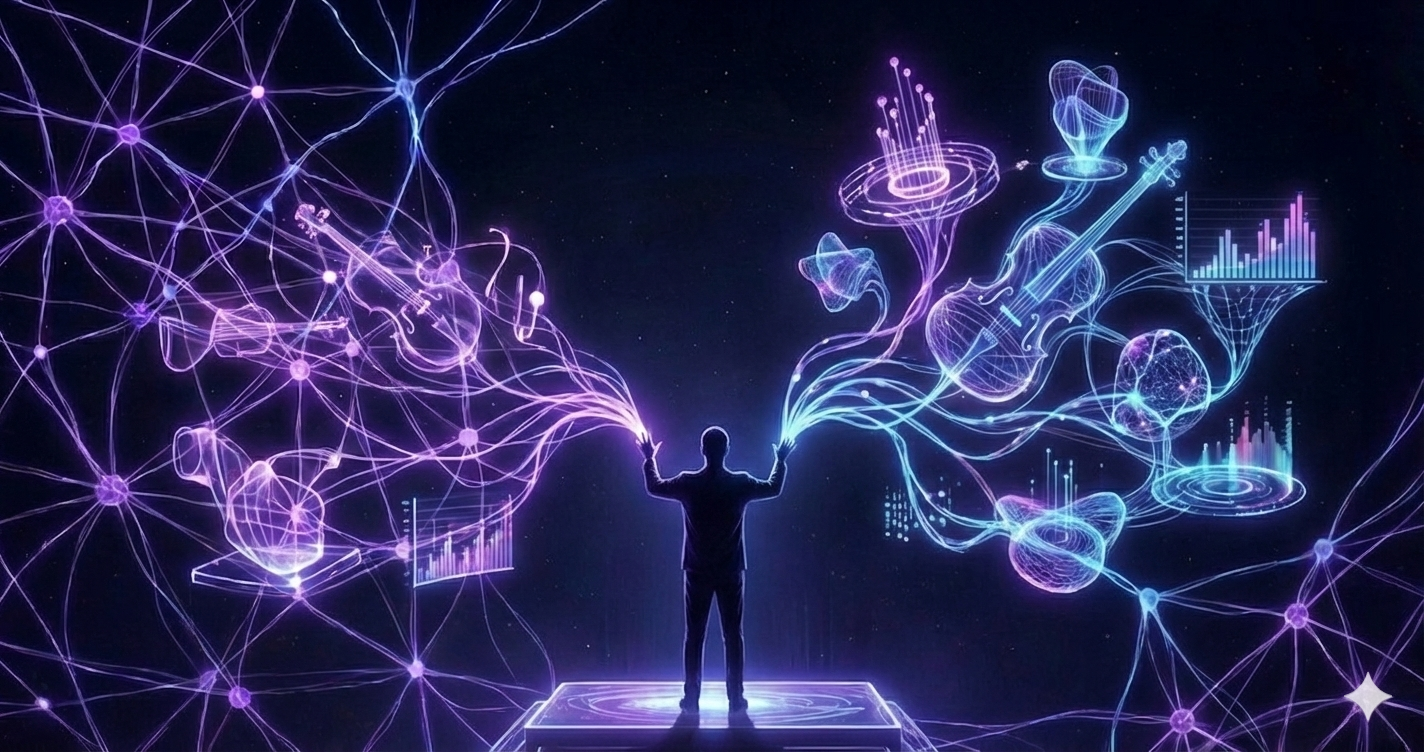
AI isn't replacing the creative class; it's removing the friction of execution. The new creative economy values "intent over effort," giving rise to roles that didn't exist a year ago.
- New roles: AI Creative Directors, Workflow Designers, and Synthetic Media Assistants.
- The shift: Moving from being a "tool operator" to being a "vision curator."
- Discernment and taste are now the highest-paid survival skills in the creative industry.
People talk a lot about the jobs AI is going to replace, but almost nobody talks about the jobs AI is actually creating right now. The reality: AI has not killed creativity, it has expanded it. It is pushing people into roles that did not exist a year ago and opening doors that used to be locked behind years of training or expensive software.
The misconception is that AI is stealing creativity from humans. It is not. It is removing the friction that used to keep people from creating in the first place. The people who had ideas but no way to execute them can now build without being a professional videographer, designer, editor, or animator. AI is turning creative intent into output, and that shift is creating a whole new class of jobs.
One example is the AI creative director. These are people who know how to guide AI systems to produce polished work, not by clicking buttons but by understanding style, tone, structure, and consistency. They do not replace designers; they work with them. They turn raw ideas into concepts that creative professionals can elevate. It is a hybrid role that did not exist before: someone who speaks both the creative language and the AI language.
Then you have the AI content strategist. They are not just generating random posts; they are designing systems that let small teams produce the kind of output that used to require a whole marketing department. They know how to take a brand message and build a repeatable engine behind it. Companies need these people because running an account manually is already outdated. Someone has to merge human creativity with AI-driven execution.
Another emerging role is the AI workflow designer. This is a job for people who understand the creative process and also how to structure it into steps, prompts, and systems. They build pipelines—content pipelines, design pipelines, brainstorming pipelines. Instead of doing the repetitive work themselves, they design the instructions the AI follows. Creativity becomes scalable, and businesses value that.
There is also growing demand for AI stylists—people who create a specific look, tone, or voice across an entire brand using AI tools. They make sure visuals, text, and messaging stay consistent across everything the AI produces. It is a craft that requires taste, judgment, and a good eye—skills AI cannot replicate—but AI amplifies their reach across far more output.
The shift is not about replacing creatives; it is about removing bottlenecks. Teams that once spent hours on execution can now spend those hours on direction, experimentation, and quality. People who could never get past the blank canvas now have a co-creator that gets them to a draft, so they can refine and push the work further.
The jobs being created are not low-skill shortcuts. They demand the same creativity, taste, and critical thinking that good work has always needed. The difference is that those skills now scale further because AI handles the repetitive parts.
AI stylists and directors rely on judgment that AI cannot reproduce. They decide what good looks like, ensure brand consistency, and translate fuzzy ideas into clear directions the models can follow. Taste and discernment become even more valuable because they guide a much larger volume of output.
The risk is assuming AI can replace the creative class outright. Without human judgment, the work becomes generic fast. These new roles exist precisely because someone has to steer style, coherence, ethics, and brand guardrails while the AI accelerates production.
Creativity is not dying; it is evolving. The people who adapt to this shift will find themselves in roles that did not exist yesterday but will be essential tomorrow. Those who learn how to guide AI—not fight it—will shape the future of art, design, content, and storytelling. We are only seeing the beginning.